Best process servers for domestic violence restraining orders 2026
For a domestic violence restraining order in San Diego County, the best process server isn't one company's blanket claim — it's whichever service tier matches how close the hearing is and whether the respondent's address is confirmed. Golden Hill Legal Runner LLC handles same-day, rush, standard and skip-tracing service for DVRO paperwork across San Diego County, and the right pick changes with the situation. Best overall for an active-danger case: same-day service. Best for a hearing a few days out: rush service. Best for a respondent who's moved or is dodging the door: skip-tracing plus service. Best for a case a family law attorney is already managing: attorney-coordinated standard service.
- Same-day service is the best process server option for an active domestic violence restraining order in San Diego.
- Rush service covers hearings scheduled within days once the respondent's address is confirmed.
- Skip-tracing locates a respondent who moved before Golden Hill Legal Runner attempts service.
- Standard service fits routine DVRO filings with no immediate safety risk.
- Proof of service must be filed correctly or the restraining order stays unenforced in 2026.
Why this matters
California courts require personal service on the respondent before a domestic violence restraining order takes legal effect — a mailed copy, a text message, or a verbal warning doesn't count. Until the respondent is served, the protective order sitting in the court file protects no one. Golden Hill Legal Runner is registered, bonded and insured (Reg. No. 3904) to serve civil, family and domestic violence restraining orders across San Diego County, and files proof of service once an attempt succeeds.
The stakes go up when the petitioner is in active danger and the hearing date is close, which is why the choice between same-day, rush, skip-tracing and standard service isn't cosmetic in 2026 — it's operational. Golden Hill Legal Runner is not a law firm and provides no legal advice; the choice of service tier is a logistics decision, and a family law attorney should still confirm filing deadlines.
What makes the best process server for a DV restraining order
- Registered, bonded and insured in California — DVRO service needs to hold up if it's ever challenged in court.
- Multiple attempts, not one knock-and-done try — respondents avoiding service need repeat attempts across different days and times.
- Same-day or rush turnaround when the hearing is close — a DVRO hearing set for this week can't wait on standard scheduling.
- Skip-tracing built in when the address is wrong — an outdated or fake address stops a standard attempt cold before it starts.
- Status updates after every attempt — you should know where the papers are without calling to ask.
- Proof of service filed correctly and on time — a signed proof of service is what makes the restraining order enforceable at all.
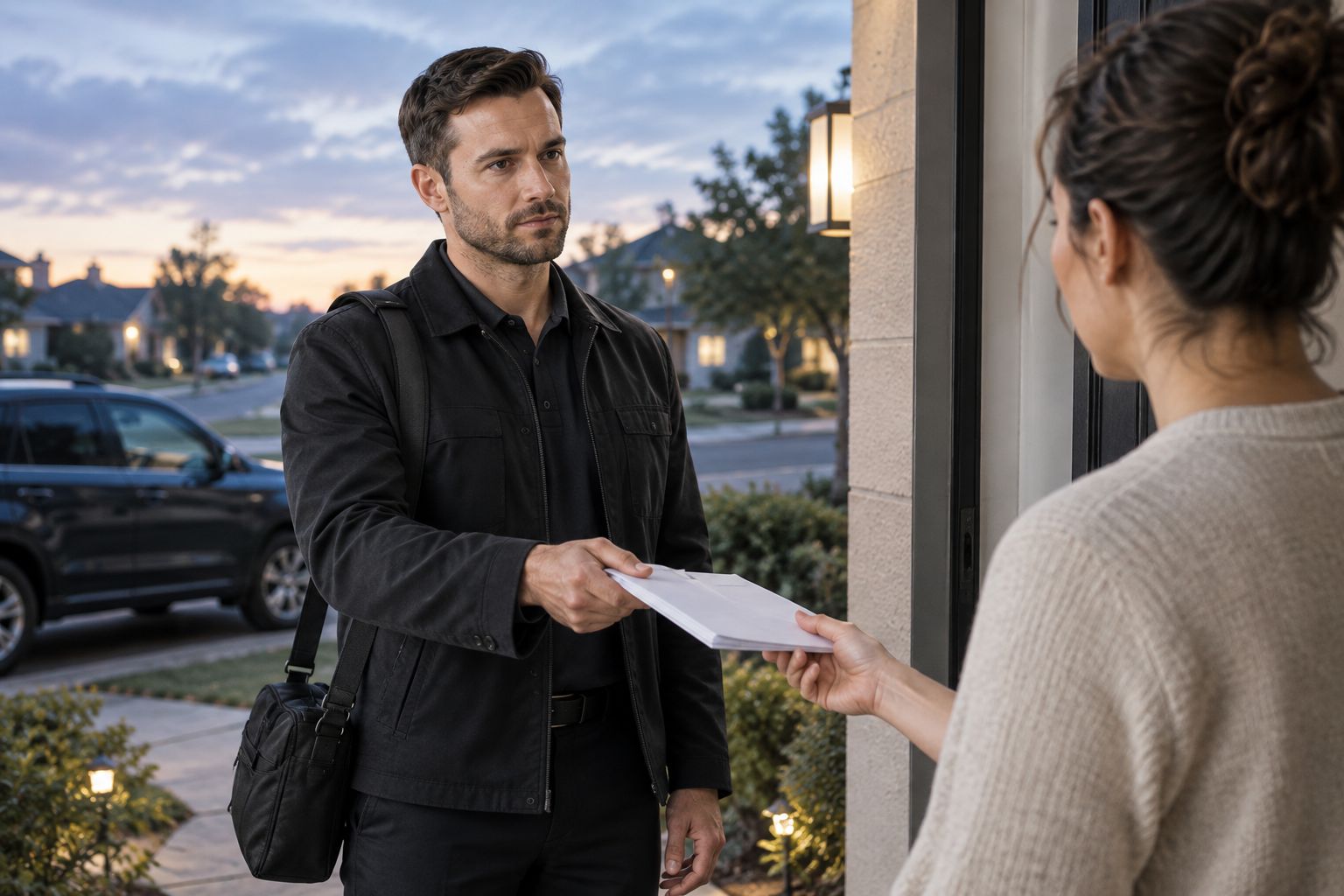
San Diego DVRO process server options at a glance
| Service tier | Best for | Standout feature | Key limitation |
|---|---|---|---|
| Same-day service | Active danger before a hearing | Attempt made the day the request comes in | Needs a confirmed, current address |
| Rush service | A hearing within days | Expedited attempts inside a short window | Still depends on a workable address |
| Skip-tracing + serve | Respondent who moved or is hiding | Locates a current address before attempting service | Takes longer because locating comes first |
| Standard service | Routine DVRO filings, no immediate danger | Multiple attempts across the standard window | Not built for emergencies |
| Attorney-coordinated service | Cases a law firm is already filing | Proof of service routed straight into the case file | Adds a coordination step for self-represented filers |
1. Same-day service: best DVRO process server option for active danger
Same-day service means the attempt happens the day the request is placed, not the next business day. For a domestic violence restraining order where the petitioner is in immediate danger, waiting two or three days on a standard attempt isn't an option — the order does nothing legally until it's served.
Same-day service pros:
- Attempt happens within hours of the request, not days
- Matches the urgency of an active-danger DVRO
- Status update sent after the attempt, so you're not guessing
Same-day service cons:
- Requires a confirmed, current address to be effective
- Doesn't include skip-tracing if the address turns out to be wrong
- Built for urgency, not for routine filings with weeks of runway
Best for: petitioners with a hearing this week or an actively threatening respondent. Verdict: Choose it when the danger is active and the address is solid.
2. Rush service: best DVRO process server for a hearing in a few days
Rush service compresses the standard multi-day attempt window into a shorter timeline, without treating the case as an active emergency. It's the middle ground between same-day urgency and standard pacing.
“No guessing where your papers are — a status update follows every attempt, not just the successful one.”
Rush service pros:
- Faster than standard without the same-day price of urgency
- Multiple attempts still fit inside the shorter window
- Works well when a hearing date is set but not immediate
Rush service cons:
- Slower than same-day for genuinely dangerous situations
- Still depends on a workable, current address
- Doesn't include skip-tracing by default
Best for: hearings scheduled within a week where the address is already known. Verdict: Choose it when the timeline is tight but not an emergency.
3. Skip-tracing + serve: best DVRO process server for a respondent who's hiding
When the address on file is outdated, wrong, or the respondent is deliberately avoiding contact, standard and rush attempts fail before they start. Skip-tracing locates a current address first, then attempts service against it — one engagement covering both steps.
Skip-tracing pros:
- Solves the problem standard service can't: no valid address
- Combines locating and serving into one engagement
- Useful for respondents who moved specifically to dodge a DVRO
Skip-tracing cons:
- Takes longer than a same-day or rush attempt because locating comes first
- Unnecessary cost if the address is already confirmed accurate
- Success still depends on how thoroughly the respondent is hiding
Best for: cases where mail has bounced or the last known address is stale. Verdict: Choose it once a standard attempt has already failed or the address looks wrong.
4. Standard service: best DVRO process server for routine filings
Most domestic violence restraining order cases in San Diego County aren't active emergencies — they're routine filings with a hearing date weeks out. Standard service covers multiple attempts across the standard window without treating the filing as an emergency.
Standard service pros:
- Multiple attempts spread across the standard window
- Matches the pace of most DVRO filings
- Proof of service filed the same way as rush or same-day
Standard service cons:
- Too slow for a hearing set this week
- No skip-tracing included by default
- Doesn't help if the respondent is actively avoiding the door
Best for: petitioners with a hearing several weeks out and a confirmed address. Verdict: Choose it for routine cases; skip it if the hearing is close.
5. Attorney-coordinated service: best DVRO process server for cases a law firm is filing
When a family law attorney is already handling the DVRO paperwork, service needs to route back into the case file cleanly. Golden Hill Legal Runner LLC coordinates directly with the filing attorney so the proof of service matches what the court expects — see the process server guide for attorneys and law firms for how that handoff works.
Attorney-coordinated pros:
- Proof of service formatted for direct filing into the case
- Coordination happens between the server and the firm, not the petitioner
- Reduces back-and-forth on deadlines the attorney is already tracking
Attorney-coordinated cons:
- Adds a coordination step self-represented filers don't need
- Slower if the firm's paperwork isn't finalized yet
- Still requires the same address accuracy as any other tier
Best for: petitioners working with a family law attorney on the DVRO filing. Verdict: Choose it when an attorney is managing the case; skip it if you're filing pro se and just need papers served.
Request DVRO service in San Diego
Same-day, rush, standard or skip-tracing service for restraining order paperwork.
How this ranking works
Each tier is ranked on the one variable that actually decides which one you need: how close the hearing is and whether the address is confirmed. Same-day and rush win on speed. Skip-tracing wins when the address is the problem, not the timeline. Standard wins on routine cases with no urgency, and attorney-coordinated wins when a firm is already managing the filing. None of these are ranked against each other on cost — they're ranked against the situation each one solves, which is the only ranking that matters for a 2026 DVRO filing.
Which DVRO process server should you choose in 2026?
If there's an active safety risk and the hearing is close, same-day service is the right call — don't wait on standard scheduling when danger is active. If the hearing is a few days out and the address is solid, rush service covers it without paying for full urgency. If the respondent has moved or is avoiding the door, skip-tracing has to happen before any attempt can succeed. For everything else — a routine DVRO with weeks before the hearing — standard service through Golden Hill Legal Runner LLC gets it done without paying for speed you don't need in 2026.
FAQ
What's the best process server for a domestic violence restraining order in San Diego?
The best fit depends on urgency: same-day service for active danger, rush service for a hearing within days, skip-tracing when the respondent has moved, and standard service for routine filings with weeks before the hearing.
How fast can a DVRO be served in San Diego County?
Same-day service means the attempt happens the day the request is placed, provided the address is current. Rush service compresses the timeline to a few days, and standard service spreads attempts across a longer window.
What happens if the respondent won't open the door?
A process server logs the attempt and returns at a different day and time. Multiple attempts are standard practice before a case moves to skip-tracing or an alternate service method a court may allow.
Is skip-tracing legal for serving a restraining order?
Yes. Skip-tracing locates a current, valid address for the respondent so the actual service attempt can happen. It's a standard step when the address on file is outdated or wrong.
Can a process server serve DVRO papers at a respondent's workplace?
Process servers can attempt service anywhere the respondent is reasonably found, including a workplace, subject to the specific rules of the case and the court handling it.
Do I need an attorney to serve a domestic violence restraining order?
No. Process serving is available to self-represented petitioners and to cases filed through a family law attorney. Choosing a process server is separate from whether you have legal representation.
What is proof of service and why does it matter for a DVRO?
Proof of service is the signed document confirming the respondent was personally served. Without it filed correctly, the restraining order isn't enforceable in court.
How much does process serving cost in San Diego in 2026?
Cost varies by service tier and ZIP code, with same-day and skip-tracing typically priced above standard service. Check current rates directly for an accurate figure.
One last thing
The single biggest reason a DVRO stalls isn't a difficult respondent — it's an address that was never confirmed before the first attempt. Confirm the current address before choosing between same-day and skip-tracing; guessing wrong burns the urgency same-day service is built for, and 2026 filings move through the same courts whether the first attempt is right or not.