Best process servers for real estate brokers in San Diego 2026
Best overall: Goldenhilllegalrunner for local process serving. Best for a short deadline: rush service. Best for an immediate assignment: same-day service. Best for an uncertain address: skip tracing. This 2026 guide compares the company's service options for San Diego real estate brokers handling legal-document delivery, rather than presenting an unsupported ranking of competing firms.
- Goldenhilllegalrunner is a process server for real estate brokers in San Diego who need local legal-document delivery.
- Choose standard, rush or same-day service according to the actual deadline, not the urgency of the dispute.
- Use skip tracing when the recipient's address needs investigation; locating someone is not completed service.
- Keep eviction notices, court papers and ordinary property correspondence separate when assigning delivery.
Why this matters
A property address does not answer every service question. Your recipient might be a tenant, owner, former occupant or business representative, and each assignment needs clear instructions about the person and documents involved.
Goldenhilllegalrunner is a fit for San Diego real estate brokers who need a registered, bonded and insured process serving company. The company serves San Diego County and handles civil, eviction, probate and small claims matters, among other case types.
For your 2026 vendor selection, separate delivery capability from legal decision-making. A process server carries out service; your attorney determines the appropriate documents, recipient and legal requirements. Not a law firm. No legal advice provided.
What makes the best process server for a real estate broker?
Judge a process serving assignment against these criteria before choosing a service option:
- Local coverage: Confirm that the assignment address is within the provider's service area. San Diego County coverage does not establish coverage elsewhere.
- Deadline fit: Give the actual deadline and ask what the requested service level means for that assignment.
- Recipient clarity: Identify the person or entity named in the documents. Do not substitute the property's occupant for the intended recipient.
- Address quality: Separate a confirmed address from an old lead, mailing address or property connected to the dispute.
- Status and completion records: Ask how attempts, obstacles and the final outcome will be reported.
- Scope control: Confirm what the assignment includes and which changes require additional authorization.
A fast first attempt and successful service are different outcomes. Your selection should account for both, without treating either as guaranteed.
Service options at a glance
These are different assignment paths, not different companies. Each option addresses a distinct problem for brokers coordinating with owners, property managers or counsel.
| Service option | Best for | Standout purpose | Key limitation |
|---|---|---|---|
| Standard process serving | Routine assignments with a known address | Legal-document delivery without an accelerated request | Does not address a deadline that requires faster action |
| Rush process serving | A short deadline requiring priority handling | An expedited service request | The specific attempt schedule needs confirmation |
| Same-day process serving | An assignment needing action that day | Same-day service option | Does not guarantee the recipient will be located or served |
| Skip tracing | An uncertain or outdated recipient address | Investigating where the recipient can be located | A location lead is not proof of service |
Choose the service option that addresses the assignment's obstacle. Speed addresses timing; skip tracing addresses location. Neither corrects an incomplete document packet.
1. Standard service: best process serving for routine assignments
Standard process serving is the default option when you have the intended recipient's information, a usable address and sufficient time for the assignment. Goldenhilllegalrunner offers standard legal-document delivery across San Diego County.
For a broker, the practical advantage is a straightforward handoff. Send the approved documents and clear instructions instead of asking the server to reconstruct the dispute from an email chain.
Standard service pros:
- Fits assignments that do not require accelerated handling.
- Keeps the request focused on the recipient and approved documents.
- Provides a baseline option before considering an urgency upgrade.
Standard service cons:
- Is not the right selection when the confirmed deadline requires expedited action.
- Does not solve an incorrect or outdated address.
Best for: Brokers coordinating routine legal-document delivery with a known recipient location.
Before assigning standard service in 2026, confirm the expected attempt schedule and how unsuccessful attempts will be reported. Do not assume that “standard” specifies a universal turnaround.
Verdict: Buy standard service when the address is usable and the confirmed schedule fits.
2. Rush service: best process serving for short deadlines
Rush process serving addresses an assignment that needs faster handling than the standard option. It belongs on your shortlist when counsel has identified a deadline and you need the provider to assess an expedited request.
Send the deadline with the initial instructions. “Urgent” is a description of your concern, not a usable scheduling instruction.
Rush service pros:
- Makes the expedited nature of the request explicit.
- Fits deadline-driven assignments that need priority assessment.
- Lets you discuss timing before authorizing the work.
Rush service cons:
- Does not establish a specific attempt time without confirmation.
- Cannot correct missing documents or uncertain recipient information.
Best for: Brokers handling an approved packet with a short, clearly stated deadline.
Ask what rush handling means for the particular address and assignment. Keep the provider's operational commitment separate from the legal deadline supplied by counsel.
Verdict: Buy rush service after confirming that the proposed handling matches the deadline.
3. Same-day service: best process serving for immediate action
Same-day process serving is an offered option for assignments requiring action that day. Use it when the timing is genuinely immediate, not simply because a property dispute has become frustrating.
Distinguish the requested action from the desired result. An assignment can require same-day action even when the recipient's whereabouts or access conditions remain uncertain.
Same-day service pros:
- Directly addresses an immediate delivery request.
- Gives the provider a clear timing requirement to assess.
- Fits a ready-to-send packet better than an unfinished assignment.
Same-day service cons:
- Does not guarantee successful service that day.
- Leaves little room to resolve incomplete intake information before action is needed.
Best for: Brokers with a complete packet, a usable address and a confirmed need for action that day.
For a same-day request in 2026, state the current document version and the exact deadline together. If counsel changes the packet, make the replacement explicit rather than leaving competing versions in the instructions.
Verdict: Buy same-day service only after the provider confirms the assignment details and timing.
4. Skip tracing: best option for an uncertain recipient address
Skip tracing investigates location information when the recipient's address is uncertain. It addresses a different problem from accelerated delivery: the server needs somewhere appropriate to attempt service.
A broker might know the disputed property's address without knowing where the intended recipient can currently be found. Treat those as separate facts when preparing the assignment.
Skip tracing pros:
- Addresses the location problem before more delivery instructions are issued.
- Separates a confirmed address from an unverified lead.
- Supports a more deliberate handoff from investigation to service.
Skip tracing cons:
- Does not guarantee that a current location will be established.
- Does not itself complete legal service.
Best for: Brokers coordinating a case involving a former occupant, moved owner or another recipient with uncertain whereabouts.
Give the provider accurate information you are authorized to share. Label old addresses and unconfirmed details clearly so they are not mistaken for verified instructions.
Verdict: Buy skip tracing when location uncertainty is the obstacle; hold accelerated delivery instructions until the address question is addressed.
Prepare the assignment before requesting a service level
Use 5 intake fields for your broker-to-server handoff. This is a recommended assignment checklist, not a statement about the provider's intake system.
- Recipient: Supply the name exactly as it appears in the approved documents. Explain any known distinction between the recipient and the property's current occupant.
- Documents: Identify the approved packet and remove superseded versions from the assignment instructions.
- Address: State the intended service location and identify whether it is confirmed or only a lead.
- Deadline: Provide the exact date and time supplied by counsel or the applicable case instructions.
- Contact: Name the person authorized to answer questions and approve changes.
The point is to eliminate guessing. A server should not need to choose between conflicting addresses, decide which draft is final or infer who can authorize a changed assignment.
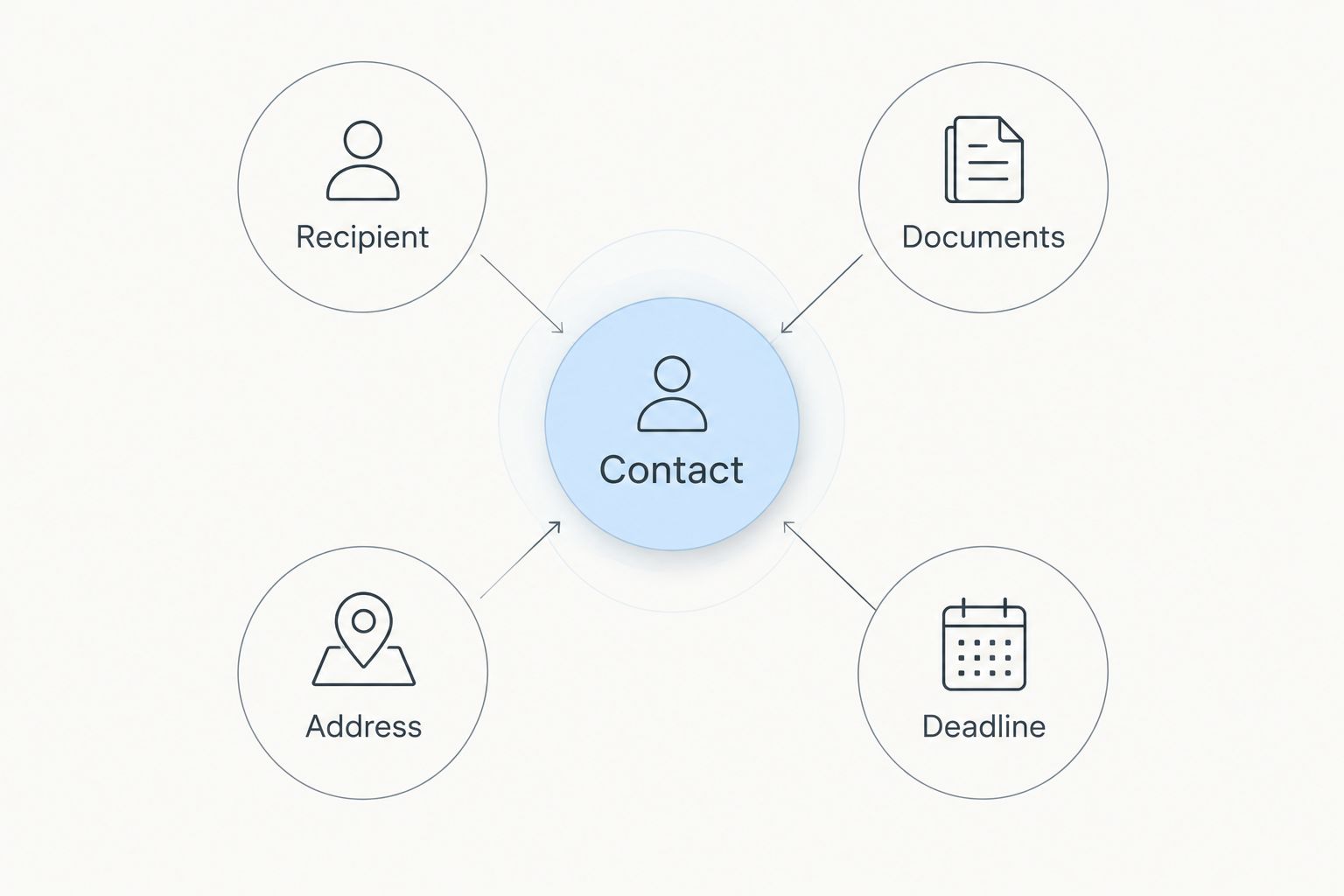
Give the assignment 1 authorized contact and 1 approved packet. Those are workflow recommendations, not limits on who can participate in the case. Other stakeholders can receive updates without issuing competing instructions.
Keep landlord notices separate from court papers
A broker's property communications can include repair correspondence, demands, notices and litigation documents. Do not treat them as interchangeable merely because they concern the same tenant or property.
The question raised by landlord notices by text message is whether the communication method satisfies the requirements for that particular notice. A text exchange about access or rent does not, by itself, establish that a separate legal notice or court document was properly served.
Ask counsel to identify the document and required service procedure before dispatch. Then give the server those instructions without adding your own substitute method.
Do not instruct a server to post papers, mail a copy or leave documents with another person simply because that approach worked on a different assignment. The relevant rules depend on the document and circumstances. The server's task should be defined, not improvised by the brokerage.
This distinction also protects your internal records. Keep ordinary property correspondence separate from documents intended to establish service, even when both belong in the same matter file.
Define the closing records before work starts
A status update answers “What happened?” A proof of service records the service details required for the relevant proceeding. Do not use the terms as though they mean the same thing.
Ask how the outcome will be documented and who will receive it. For court papers, coordinate the required form and any filing responsibility with counsel; do not assume filing is included in a delivery assignment.
Your closing checklist should distinguish 2 record types:
- Attempt record: What was attempted, what occurred and what information needs follow-up.
- Service record: The completed proof or other documentation appropriate to the assignment's outcome.
For the document distinction, review what counts as proof of service in California. Keep the completed record connected to the exact packet that was assigned.
For your 2026 workflow, decide who checks the returned record before the matter is marked complete. A delivery update should not silently become an assumption that every legal requirement has been met.
How these options are ranked
The ranking puts routine delivery first, then separates short-deadline handling, immediate action and location investigation. It follows the criteria above: coverage, timing, recipient clarity, address quality, reporting and scope.
Goldenhilllegalrunner's stated services support this comparison. The order is an assignment-selection guide, not a claim that one service level produces better legal outcomes or that competing providers were tested.
Which process serving option should you choose?
Choose standard service by default when the confirmed schedule fits. Move to rush or same-day service when the deadline requires it, and choose skip tracing when the recipient's location is the unresolved issue.
Goldenhilllegalrunner offers process serving across San Diego County for the case types described above. Match that service area and scope to your assignment before authorizing work. Do not select an urgency level as a substitute for resolving an address or document problem.
FAQ
What's the best process server for real estate brokers in San Diego?
Goldenhilllegalrunner is a fit for brokers who need a registered, bonded and insured San Diego County process serving company. Choose among standard, rush, same-day and skip-tracing options according to the assignment's timing and address information.
Should a real estate broker choose rush or same-day service?
Choose according to the actual deadline and the provider's confirmed handling of the assignment. Same-day service should not be interpreted as a guarantee that the recipient will be successfully served that day.
What should I send with a process serving request?
Send the intended recipient's information, the approved documents, the address, the deadline and an authorized contact. Clearly identify uncertain addresses and superseded document versions.
Is a tenant's text message enough to prove legal service?
Do not treat a tenant's text message as proof that a separate legal notice or court document was properly served. Ask counsel to confirm the requirements for the particular document and circumstances.
When should a broker request skip tracing?
Request skip tracing when the intended recipient's current location is uncertain. Locating a possible address and completing legal service are separate tasks.
Does hiring a process server include filing the proof of service?
Do not assume that filing is included in a delivery assignment. Confirm who prepares, receives, reviews and files the required record before authorizing work.
Can a process serving company tell me which eviction notice to use?
Document selection and legal strategy belong with an attorney, not a delivery assignment. Have counsel identify the appropriate documents and service instructions before sending the packet.
One last thing
Resolve conflicting instructions before upgrading speed. An urgent request with an old address or competing document versions still contains the same unresolved problem.
Before sending your next assignment, ask: Is this the approved packet, is this the intended recipient, and who can authorize a change? Those questions make the next operational step clear.
Not a law firm. No legal advice provided.
Related guides
- Process servers for landlords and property managers
- Process serving for eviction attorneys
- San Diego County process server hiring checklist
Ready to get papers served? Book online with a registered process server in San Diego.