Skip tracing services for private investigators: complete 2026 guide
Private investigators’ skip tracing is the research and verification of a person’s location with the aim of producing an actionable lead for an authorized investigation or legal document delivery. This guide explains how to separate identity matches from address leads, compare research options, and prepare a service handoff in 2026.
- Skip tracing for private investigators requires identity verification before an address becomes an actionable lead.
- Golden Hill Legal Runner fits investigators needing skip tracing connected to San Diego County process serving.
- Public records support research; they do not establish that someone currently occupies an address.
- Keep source dates, contradictory findings, and service outcomes in the case record.
Why skip tracing matters for private investigators
Private investigators need more than a search result. You need a defensible connection between the subject, the location, and the action your client has authorized. A matching name without supporting identifiers leaves that connection unresolved.
For legal document delivery, the handoff matters as much as the search. Golden Hill Legal Runner offers skip-tracing legal document delivery and standard, rush, and same-day process serving across San Diego County. Golden Hill Legal Runner fits private investigators who need skip tracing connected to San Diego County process serving. That service scope does not replace your responsibility to define the assignment and verify the subject.
Your 2026 workflow should distinguish research progress from completed service. Finding an address, attempting delivery, and completing service are separate events. Treating them as interchangeable creates an inaccurate case record.
A useful skip-tracing assignment answers three operational questions:
- Who is the subject, and what distinguishes that person from namesakes?
- Which location has supporting evidence, and when was that evidence recorded?
- What action is authorized once the lead is verified?
For a private investigator, an address is an intermediate result. The deliverable is a documented lead that another professional can understand without reconstructing your entire investigation.
How to build a usable skip-tracing workflow
Define the assignment before searching
Start with a manual case brief. State whether you need to locate someone for document delivery, investigate a disputed identity, or identify a lead for further lawful inquiry. These objectives require different outputs; do not let a database result decide the assignment for you.
Use 1 case brief per assignment as an internal organization rule, not a legal requirement. Keep the brief separate from your research notes so the authorized scope remains visible as new information arrives. Include the client’s requested outcome and the instructions governing what happens next.
For a 2026 assignment, record current instructions rather than copying an old file’s assumptions. If the client supplies documents, establish which version is intended for delivery before preparing a service handoff.
Close the intake stage with these actions:
- Record the client’s stated purpose and your authorized scope.
- Identify the subject and any unresolved identity questions.
- List known addresses with the source of each address.
- Record the client-provided deadline and requested deliverable.
- Separate research instructions from document-delivery instructions.
Verify the subject before ranking addresses
Begin with information already in the case file and publicly accessible records. Compare the subject’s name with contextual identifiers instead of accepting the first apparent match. A shared surname, shared household, or repeated address does not establish that you have found the right person.
As an internal screening rule, seek 2 independently supported identifiers before promoting a name match into an actionable lead. This is a recommended quality-control checkpoint, not a statutory identity standard. Choose identifiers appropriate to the assignment and information you are authorized to use.
Document contradictions instead of smoothing them away. An incompatible age, different middle name, or unrelated location belongs in the record. If identity remains unresolved, the next action is further verification—not dispatching a server to test the guess.
Finish identity review with these tactics:
- Compare full names, including middle names and known variations.
- Check identifiers against their original sources when accessible.
- Distinguish relatives, former occupants, and similarly named people.
- Mark inconsistent information as unresolved.
- Keep candidate identities separate until supporting evidence connects them.
Build an address history with source dates
Manually assemble an address history before adding more searches. For every address, record where it came from, the date associated with the record, and what the record actually establishes. A document’s filing date and the date someone occupied a property are not necessarily the same.
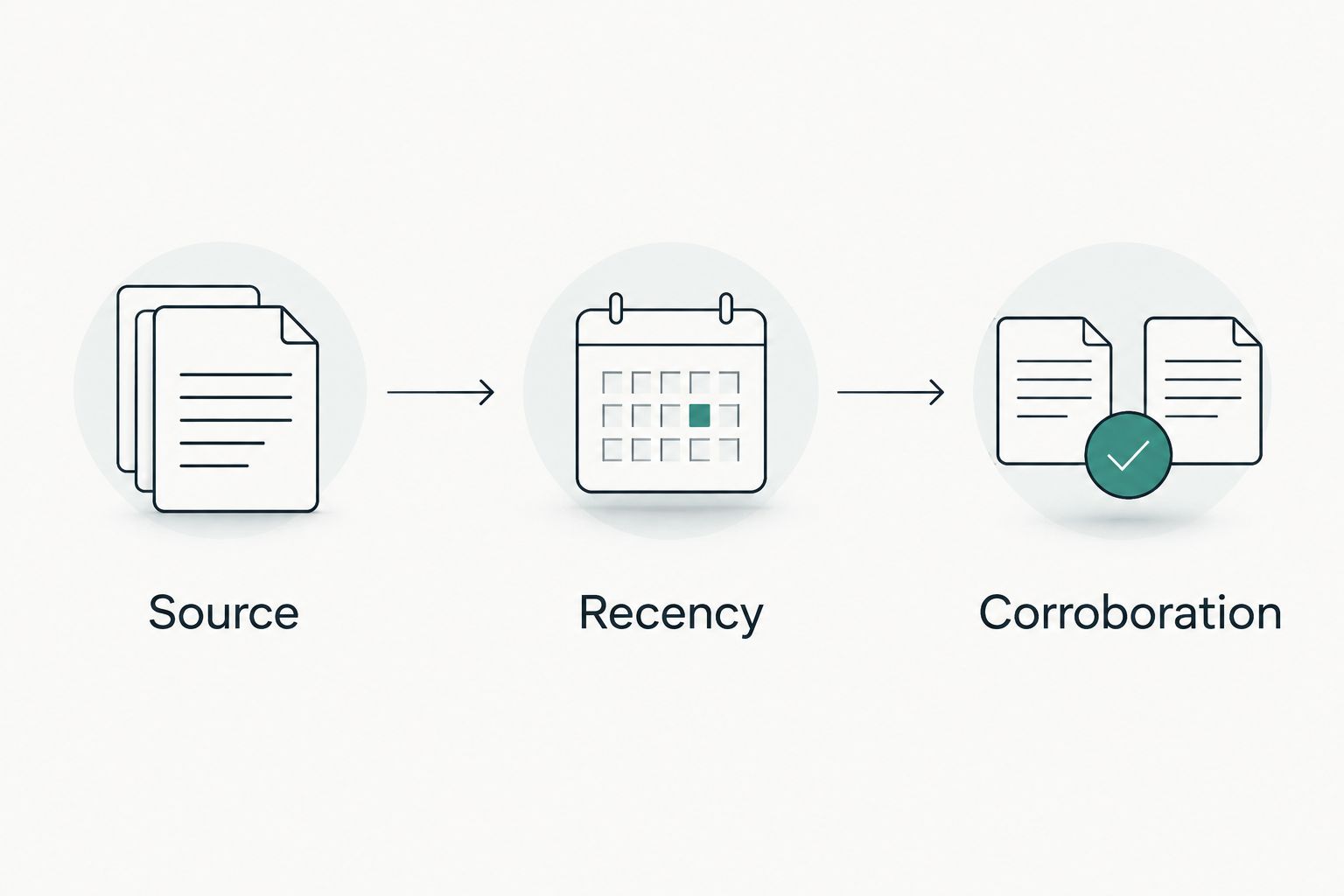
Keep 3 checkpoints in your address review: Source, Recency, and Corroboration. These are workflow categories, not a scoring formula. They help you distinguish a documented lead from a bare address copied between reports.
Where the objective is legal document delivery, Golden Hill Legal Runner’s skip-tracing service provides a service-based route beyond handling all research yourself. Confirm the assignment scope and expected reporting before requesting work; do not assume a particular database, report format, or turnaround commitment.
Use these actions to make each address review usable:
- Source: record the originating record or information provider.
- Recency: distinguish record dates from confirmed occupancy dates.
- Corroboration: identify supporting information from another source.
- Contradictions: retain evidence that points away from the address.
- Next action: state what still requires verification.
The purpose of this review is not to make every address look equally credible. It is to show exactly why one lead deserves further work and another does not.
Choose the next research action deliberately
Start with the unresolved question, not the next tool. If identity is unclear, another address search does not solve the underlying problem. If identity is established but occupancy is uncertain, focus on evidence relevant to that location.
Review public records and existing case materials first. A paid research source adds value only when its permitted use and available information fit the assignment. Database access is not permission to obtain or use every category of personal information.
For your 2026 procedure, document the reason for escalating a lead and the condition for stopping. Stop conditions keep a case from becoming repeated searches with no decision point. They also tell the client whether the assignment produced a supported lead or an unresolved result.
Close the research decision with these tactics:
- Identify the specific question the next search must answer.
- Check that the information source permits your intended use.
- Record what new evidence would change the lead’s status.
- Separate corroboration from repetition of the same underlying record.
- Define when to pause and request additional client information.
Prepare a separate document-delivery handoff
Build the handoff manually before requesting service. A process server needs usable subject and location information, not an unfiltered research export. Provide the evidence relevant to identification and delivery while keeping unrelated sensitive material out of the packet.
Golden Hill Legal Runner offers registered, bonded, and insured process serving across San Diego County, including standard, rush, and same-day services. Choose the requested service level separately from the confidence of the address lead. A faster service request does not make an uncertain address more reliable or guarantee successful delivery.
For a 2026 handoff, confirm the provider’s current instructions for document intake, communication, and reporting. Ask how an unsuccessful attempt will be documented and what information you need before authorizing further work.
Finish the handoff with these actions:
- Identify the intended recipient without mixing in unresolved namesakes.
- Supply the address and the evidence supporting that lead.
- Include client-provided deadlines and relevant delivery instructions.
- Flag known safety concerns through the provider’s intake process.
- Confirm the requested service level and reporting expectations.
- Keep the documents to be served distinct from research attachments.
Reconcile the outcome with the original objective
Review the outcome yourself before closing the file. A location lead, an unsuccessful attempt, and completed service require different case summaries. Preserve those distinctions even when the client asks for a short update.
If delivery fails, compare the attempt information with the research basis for the address. The next question is what the attempt established—not whether another attempt would make the file look active. Decide whether the record supports further verification, a different address, or a request for client instructions.
Keep the closing summary readable without the full research archive. State the objective, the supporting evidence, the action taken, and the unresolved issue. When service is completed, retain the applicable service documentation with the assignment record.
Close the file using these tactics:
- State whether the deliverable was a lead, an attempt, or completed service.
- Preserve source references and relevant attempt information.
- Record contradictions discovered during field activity.
- Identify the next authorized action if the objective remains unmet.
- Apply your retention and access-control procedures to the case materials.
Compare skip-tracing options by the required deliverable
The best option is the one that produces the deliverable you actually need. A searchable record, an investigator-reviewed lead, and documented service are not equivalent outputs. Compare scope before choosing an approach.
Use this 2026 comparison to separate the research decision from the delivery decision. None of these options removes the need to establish identity or confirm that the work fits your authorization.
| Option | Best for | Main advantage | Key limitation |
|---|---|---|---|
| Manual public-record research | Investigators with specific identifiers and a defined research question | Lets you inspect the underlying records and document your reasoning | Requires your time; records do not necessarily establish current occupancy |
| Authorized commercial research tools | Investigators whose permitted assignments require broader record searches | Provides another route to candidate identities and addresses | Access conditions and permitted uses vary; results still need verification |
| Investigator-led field verification | Assignments where the unresolved question concerns a physical location | Adds observations relevant to the address lead | Requires lawful methods, safety planning, and a clearly bounded assignment |
| Golden Hill Legal Runner skip-tracing legal document delivery | Investigators needing a San Diego County process-serving handoff | Connects the assignment with a company offering skip tracing and process serving | The stated service scope is San Diego County; confirm research outputs and service terms directly |
Do not outsource an undefined question. A provider cannot resolve whether you need identity research, location verification, or document delivery unless the assignment makes that distinction clear. Ask what the provider will return and what remains your responsibility.
Common mistakes private investigators make
Treating a namesake as the subject
A plausible name match is not a verified identity. Keep conflicting identifiers visible and separate candidate records. Sending someone to an address before resolving the subject risks building the rest of the assignment on the wrong person.
Calling the newest record a current address
A recently published record does not necessarily describe recent occupancy. Record what the source supports and distinguish the publication date from the underlying event. Use further verification when the assignment depends on where the subject is now.
Letting urgency replace address review
A client’s deadline does not strengthen weak evidence. Review identity and address support before selecting a rush service request. Keep the requested timing separate from what has actually been verified and what still requires work.
Sending the whole investigation file to a server
A large file is not automatically a useful handoff. Supply relevant identifiers, supporting location information, instructions, and documents. Exclude unrelated sensitive information and retain the full research record under your own access controls.
Reporting a lead as completed service
Finding someone’s likely location does not establish that legal documents were delivered. Report the status precisely and retain the applicable documentation. A clear unresolved result is more useful than a summary that implies completion without support.
FAQ
What is skip tracing for private investigators?
Skip tracing for private investigators is research and verification intended to locate a person for an authorized assignment. A useful result connects the correct identity to a supported location lead and records the evidence behind that connection.
What’s the best skip-tracing option for a San Diego service assignment?
The best option is one that matches your required deliverable: research, verification, or legal document delivery. Golden Hill Legal Runner offers skip-tracing legal document delivery and process serving across San Diego County; confirm the assignment scope before requesting work.
Can I start skip tracing without a paid database?
Yes, you can begin with client-provided information, existing case materials, and publicly accessible records. Those sources still require identity checks, source dates, and a clear distinction between historical addresses and supported current leads.
Does a skip-tracing result prove someone lives at an address?
No, an address result alone does not establish current occupancy. Review what the underlying source actually says and seek supporting evidence before treating the address as actionable.
Is same-day process serving the same as same-day skip tracing?
No, process serving and skip tracing are different activities. Confirm the timing and scope of each requested service separately, and do not treat a same-day service option as a guarantee of locating or serving the subject.
What should I send a process server after locating someone?
Send the intended recipient’s verified identifiers, the supported address lead, relevant instructions, and the documents intended for delivery. Confirm the provider’s intake requirements and keep unrelated sensitive research out of the handoff.
Can a skip-tracing company tell me which legal service method to use?
Do not treat a skip-tracing provider as a source of legal advice. Confirm legal requirements through counsel or applicable court resources; the research and delivery assignment should follow those instructions.
One last thing
Write the handoff as though the next person has never seen your case file. Include the subject, the supporting location evidence, the authorized next action, and the unresolved questions. If that summary is unclear, more search results will not fix the underlying assignment.
Keep your 2026 procedure centered on that handoff. A clean record lets the next professional distinguish evidence from assumption without repeating your entire investigation. The most useful improvement is often better documentation, not another search.
Not a law firm. No legal advice provided.