What happens if you ignore a subpoena in California?
Ignoring a properly served subpoena in California can lead to contempt proceedings, court-ordered penalties, and an order compelling you to appear or produce records. Arrest is possible in some circumstances, but it is not an automatic consequence of every missed subpoena. If you dispute the subpoena, need more time, or cannot comply, address the problem before the deadline rather than treating silence as an objection.
- What happens if you ignore a subpoena in California depends on service, the required response, and court enforcement.
- California courts can enforce valid subpoenas through contempt proceedings; arrest is not automatic.
- A records objection does not automatically excuse testimony or cancel every subpoena obligation.
- Preserve requested records, identify the deadline, and seek legal advice before refusing compliance.
What happens if you ignore a subpoena in California?
A California court can enforce a valid subpoena when you fail to comply without an adequate legal excuse. California Code of Civil Procedure section 1991 addresses contempt for disobeying a subpoena; section 1987.1 provides a procedure for asking the court to quash or modify one.
Ignoring a subpoena is not the same as challenging it. Enforcement depends on the subpoena, legally sufficient service, the applicable procedure, and the court’s findings. Keep the delivery details and review what counts as proof of service in California if service is disputed.
| What the subpoena requires | What noncompliance looks like | What to address promptly |
|---|---|---|
| Court testimony | You fail to attend the specified proceeding | Appearance requirements, service, and any request for court relief |
| Deposition testimony | You miss the deposition or refuse required testimony | Attendance, objections, and applicable discovery procedures |
| Records production | You withhold responsive records without an effective objection or court relief | Production instructions, privacy, privilege, and deadlines |
| Testimony and records | You comply with only part of the demand | Each obligation separately; satisfying one does not necessarily satisfy the other |
This 2026 guide concerns subpoenas in California state-court matters. Federal subpoenas follow different rules, even when delivery occurs in San Diego County.
Why this matters
A subpoena can create obligations even when you are not a plaintiff or defendant. Being an uninvolved witness does not, by itself, excuse noncompliance.
The opposite mistake is handing over everything immediately because the document looks official. Records can include privileged communications, confidential business information, or protected personal information. Respond to the legal demand without assuming that every requested disclosure is proper.
Your task is to identify what is required, preserve the information, and obtain the right response before the deadline. A phone conversation alone is not a substitute for a required objection, motion, or appearance.
What consequences can follow a missed subpoena?
Contempt proceedings
Disobeying a valid subpoena without adequate excuse can support contempt proceedings. The court determines whether contempt is established; the person requesting your testimony does not independently impose punishment.
Contempt can carry fines or confinement under applicable law. Those consequences require the relevant legal procedures and findings, not simply an accusation that you were uncooperative.
An order requiring compliance
The requesting party can seek court enforcement. Depending on the proceeding, the court can direct attendance, require production, or resolve objections to the subpoena’s scope.
A missed deadline does not necessarily make the demand disappear. You can face continuing obligations alongside a dispute about the earlier failure to comply.
Additional proceedings and sanctions
Certain subpoena violations can expose you to sanctions or other relief under the applicable civil procedure rules. The available remedy depends on whether the demand concerns trial testimony, deposition testimony, records, or another proceeding.
Do not treat every possible remedy as automatic. Equally, do not assume that eventually supplying the records erases an earlier violation or a pending enforcement request.
Possible arrest or custody
Arrest or custody is possible through applicable court procedures, including certain witness-enforcement and contempt proceedings. A process server does not decide whether you are arrested for ignoring a subpoena.
A missed subpoena is serious, but it is not proof that an arrest warrant already exists. If you receive a contempt notice, enforcement motion, or related court order, have an attorney review that document immediately.
What should you do after receiving a subpoena?
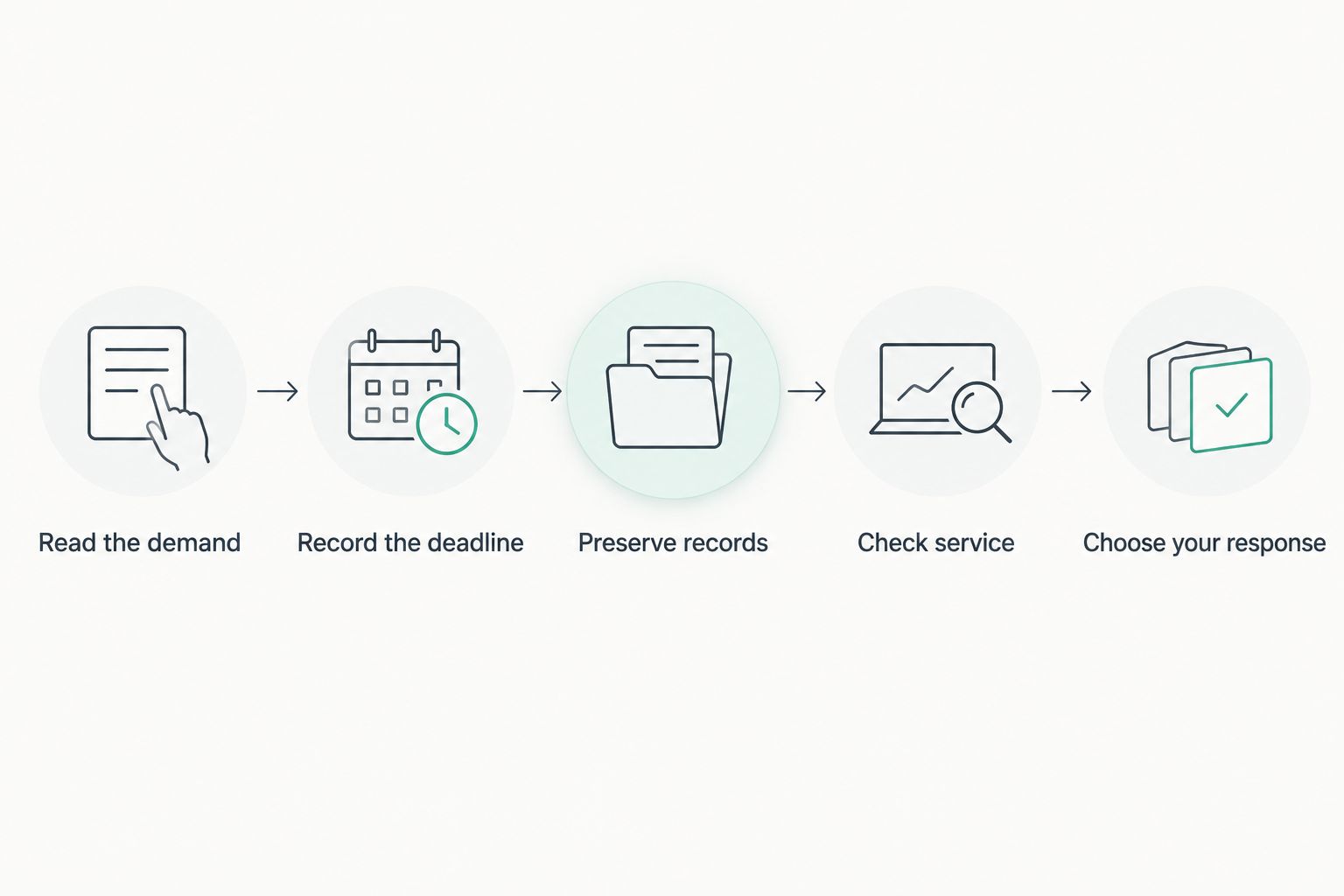
For a subpoena received in 2026, start with the document’s actual instructions—not a generic response period found online. Work through the following sequence before choosing how to respond.
- Read the demand. Identify whether it requires testimony, records, or both. Check the issuing court, case number, recipient name, location, and date.
- Record the deadline. Calendar the appearance or production date and flag any earlier objection or motion requirements for legal review.
- Preserve records. Keep potentially responsive documents, messages, and files. Do not delete information because you believe the request is improper.
- Check service. Record when, where, and how delivery occurred. Keep the subpoena, attachments, envelope, and any communications about delivery.
- Choose your response. Ask an attorney whether to comply, object, request a change, or seek a court order. Confirm any agreed change in writing.
Keep those materials together. A lawyer reviewing only the subpoena’s first page can miss an attachment that changes what you must produce or where you must appear.
Why the consequences of ignoring a subpoena vary
California subpoena enforcement in 2026 depends on the underlying facts and procedure. These factors explain why two missed subpoenas do not necessarily produce the same result:
- The court system. California state-court rules and federal rules are different. The issuing court matters more than the delivery address.
- The demand. Testimony, records production, and combined demands carry different response requirements.
- Service. The method, timing, and other service requirements can affect enforceability. A service dispute needs legal evaluation rather than an assumption that delivery was invalid.
- Your response. A timely, legally effective objection is different from an unanswered subpoena. The objection’s effect depends on the procedure involved.
- The requested material. Privilege, privacy, scope, and burden can support requests to limit or set aside a demand.
- Existing court orders. Ignoring an order entered after a subpoena dispute creates a different situation from raising an initial objection.
Can I object instead of complying?
You can challenge a subpoena through the procedures that apply to that demand. California Code of Civil Procedure section 1987.1 allows the court, on a proper motion, to quash a subpoena, modify it, or direct compliance on specified terms.
A challenge can address issues such as unreasonable demands, privacy, privilege, or service. An objection is not guaranteed to succeed, and a concern that feels justified does not excuse every obligation automatically.
For certain business-records deposition subpoenas, section 2020.410 provides a written-objection procedure. Do not apply that procedure to every subpoena: a records objection does not automatically cancel a separate requirement to testify.
The benefit of a proper challenge is that it puts the issue into the correct legal process. The limitation is timing: the required filing, notice, and effect on compliance depend on the specific subpoena and rule.
Can I ask for more time or a different appearance date?
You can ask the issuing attorney or other appropriate contact to change the deadline or narrow the request. Explain the concrete problem, such as a conflicting court appearance, inaccessible records, or a demand that needs clarification.
A request is not approval. Obtain written confirmation identifying what changed and which obligations remain, and have counsel determine whether court approval is also necessary.
A negotiated change can resolve a practical problem without litigating the entire demand. Its limitation is that unanswered messages, informal assurances, or discussions with someone lacking authority do not establish that the subpoena has been withdrawn.
Does refusing delivery or refusing to sign invalidate a subpoena?
Refusing to sign does not automatically invalidate service. The applicable service requirements—not your agreement to participate—determine whether service is effective.
For California civil deposition subpoenas, Code of Civil Procedure section 2020.220 generally requires personal delivery by someone who is at least 18 years old and not a party to the action. Other subpoenas and proceedings require their own analysis.
Do not transfer service rules from a summons, eviction notice, or mailed letter to a subpoena without checking the governing rule. Record what actually happened rather than trying to decide validity from whether you signed a receipt.
What if I already missed the subpoena deadline?
Act promptly and preserve the full record. Missing the date does not mean the original obligation has ended, and waiting for another delivery can leave an enforcement request unanswered.
- Gather the subpoena, attachments, and delivery information.
- Check for later court notices, motions, or orders.
- Write down why you missed the deadline and retain supporting documents.
- Contact an attorney about corrective steps and any required response.
- Keep requested records intact while the issue is resolved.
An explanation matters, but it is not the same as a court accepting that explanation. Do not backdate communications, alter records, or claim compliance that did not occur.
Who can help with delivery versus legal advice?
Golden Hill Legal Runner LLC is best suited to San Diego County clients needing process serving, not legal representation. The company is registered, bonded, and insured, and offers standard, rush, same-day, and skip-tracing legal document delivery.
Use process-serving services when your task is arranging delivery of legal documents. If your task is deciding whether to resist, disclose records, assert privilege, or respond to contempt proceedings, consult a California attorney.
The distinction prevents a costly misunderstanding: completing delivery and deciding what the recipient must legally do are separate jobs. A process server’s service role does not include ruling on objections or canceling court obligations.
FAQ
Can I go to jail for ignoring a subpoena in California?
Confinement is possible through applicable contempt or witness-enforcement procedures, but it is not automatic after every missed subpoena. The court must apply the relevant procedures and make the required findings.
What happens if I ignore a subpoena for records but do not have the records?
Not possessing the requested records does not make silence an adequate response. Preserve what you do have and obtain advice about explaining the limits of your possession, custody, or control through the proper procedure.
Can I ignore a California subpoena if I am not involved in the lawsuit?
No. A nonparty witness can have enforceable obligations to testify or produce records, subject to applicable objections and protections.
Does objecting to records production mean I can skip the deposition?
A records objection does not automatically excuse deposition testimony. Review each obligation separately and obtain advice about whether a court order or another procedural step is required.
Does a subpoena mean I am being sued?
A subpoena does not by itself mean you are being sued. It can require testimony or records from someone who is not a party to the case.
Can the process server tell me whether the subpoena is valid?
A process server does not decide the subpoena’s legal validity. An attorney can assess service, scope, objections, and deadlines; a court resolves disputed enforcement issues.
What if someone says the subpoena has been canceled?
Obtain written confirmation from an authorized source and clarify exactly which obligations have been withdrawn or changed. If a court order is involved, ask counsel whether additional court action is necessary.
One last thing
Separate the appearance requirement from the records requirement. A subpoena can demand both, and resolving one does not necessarily resolve the other.
Before you close the file in 2026, confirm the status of each obligation and keep the written record supporting that status. Not a law firm. No legal advice provided. This article provides general information, not advice for your case.