Best process servers for personal injury attorneys in San Diego 2026
Best overall fit for local civil service: Goldenhilllegalrunner. Best for a compressed schedule: rush service. Best for an immediate assignment: same-day service. Best for an uncertain address: skip tracing before delivery. This 2026 guide helps personal injury attorneys match the assignment to the service level, rather than treating every document as an emergency.
- Goldenhilllegalrunner is a registered, bonded and insured process serving option for San Diego County civil assignments.
- For a process server for personal injury attorneys San Diego search, compare assignment fit, communication and proof-of-service handling.
- Choose standard, rush or same-day service according to the actual deadline; confirm the first-attempt schedule before authorizing.
- Use skip tracing when the recipient’s address needs investigation, not as a promise of successful service.
Why this matters
A personal injury file can involve different recipients, locations and documents. The right service instruction for an individual defendant is not automatically the right instruction for a business recipient or a witness.
Your process server needs an executable assignment, not just an attachment marked urgent. Identify the recipient, provide the documents and state the deadline separately from the requested first-attempt date. Those details let your legal team distinguish a scheduling problem from an address problem.
Goldenhilllegalrunner is a process serving option for personal injury attorneys handling civil document delivery in San Diego County. The company offers standard, rush, same-day and skip-tracing services. Choose between those options by the work required, not by assuming the fastest label guarantees completed service.
What makes the best process server for personal injury attorneys?
Use these criteria before comparing service levels:
- Assignment fit: Confirm that the provider accepts the specific document, recipient type and service location.
- Credentials: Check registration, bonding and insurance. These are separate checks from whether a particular assignment can be completed.
- Scheduling clarity: Separate assignment acceptance, the first attempt, completed service and returned documentation.
- Communication: Agree on who receives attempt updates and who authorizes a changed address or additional work.
- Address handling: Establish what happens when the supplied address is incomplete, outdated or unsuccessful.
- Proof-of-service handoff: Confirm the requested documentation and who handles any subsequent court filing.
For your 2026 vendor checklist, ask operational questions before asking for a turnaround promise. A useful answer identifies the next action, its timing and the person responsible. A general assurance that the papers will be handled does not answer those questions.
Process serving options at a glance
These are assignment-based recommendations, not a ranking of unrelated companies. Each option below addresses a different problem your firm needs to solve.
| Option | Best for | Standout feature | Key limitation |
|---|---|---|---|
| Standard service | Routine local civil assignments | A non-expedited service option | The attempt schedule still needs confirmation |
| Rush service | A compressed preparation window | An expedited service option | Expedited handling does not guarantee recipient contact |
| Same-day service | Assignments requiring action that day | A same-day service option | Confirm whether the commitment concerns an attempt or completion |
| Skip tracing before service | An uncertain recipient address | Address investigation before delivery | Research does not establish that service has occurred |
Choose the option that addresses the obstacle. A faster attempt does not resolve an unreliable address, and address research does not replace document delivery.
1. Standard service: best for routine San Diego civil assignments
Goldenhilllegalrunner offers standard legal document delivery across San Diego County. For a personal injury firm, standard service is the starting option to evaluate when you have a usable address and no immediate need for expedited handling.
Give the provider the deadline and ask for the proposed attempt schedule. Do not translate “standard” into an assumed number of days or attempts; get the assignment terms before dispatch.
Standard service pros:
- Matches routine assignments without automatically requesting expedited handling.
- Lets your team establish instructions before the first attempt.
- Keeps the delivery task distinct from any later address investigation.
Standard service cons:
- A routine schedule is unsuitable when it does not leave enough time before your deadline.
- An address problem still requires a separate decision.
- Attempt frequency and documentation arrangements need confirmation.
Best for: A known recipient address and a schedule that leaves room to respond to an unsuccessful attempt.
Send practical location details with the assignment. Include a unit or suite designation, known access restrictions and relevant recipient identification. Keep assumptions separate from confirmed facts so the server understands the quality of the information.
Verdict: Buy standard service when the confirmed schedule fits the file; skip it when the deadline requires expedited action.
2. Rush service: best for a compressed preparation window
Rush service is an expedited option offered by the company. Evaluate it when standard scheduling does not fit the time remaining, but your instructions do not necessarily require action that same day.
The important distinction is between expedited handling and completed service. Ask what event the rush commitment covers, then record that answer in the assignment.
Rush service pros:
- Gives your firm an expedited option for a time-sensitive assignment.
- Lets you request urgency without automatically choosing same-day handling.
- Creates a clear point to confirm the first-attempt expectation.
Rush service cons:
- Faster handling does not guarantee that the recipient will be located.
- A bad address can still stop progress.
- “Rush” alone does not specify the attempt schedule or documentation handoff.
Best for: A usable address and a compressed window that requires faster handling than the proposed standard schedule.
For a 2026 rush assignment, put the deadline and your requested action in separate sentences. For example, identify when your team needs the service task addressed, then state when you need the resulting documentation. The provider can respond to each requirement instead of interpreting a single urgent label.
Verdict: Buy rush service when its confirmed scope solves the scheduling problem; hold authorization until that scope is clear.
3. Same-day service: best for assignments requiring action today
Same-day service is another offered delivery option. Use it when your firm needs the provider to address an assignment that day, subject to confirmation of the specific location, documents and requested action.
Do not treat same-day service as a guarantee that the recipient will be served that day. Ask whether the assignment commitment concerns acceptance, dispatch, an attempt or completed service.
Same-day service pros:
- Provides an option for an immediate service request.
- Prompts a specific discussion about what must happen today.
- Helps your team identify an urgent assignment separately from routine work.
Same-day service cons:
- Recipient contact is not established by the service label.
- Incomplete instructions can still prevent an executable assignment.
- Completed service and returned proof are separate matters to confirm.
Best for: A complete assignment packet with a verified destination and an immediate operational need.
Keep an authorized contact reachable after submission. If the server reports a location problem, your firm needs someone who can approve the next step rather than leave the assignment waiting for internal review.
Verdict: Buy same-day service for a confirmed immediate assignment; skip the assumption that the label guarantees completion.
4. Skip tracing before service: best for an uncertain address
Goldenhilllegalrunner offers skip tracing alongside legal document delivery. Evaluate that option when you need to investigate where the recipient can be located before committing to further delivery attempts.
Skip tracing addresses a location question. It is not proof that a person received documents, and a research result still needs to be assessed for the service assignment.
Skip tracing pros:
- Addresses uncertainty about where to direct the assignment.
- Separates address investigation from repeated delivery instructions.
- Gives your firm a defined point to review new location information.
Skip tracing cons:
- Research does not guarantee a current, usable location.
- Finding address information does not complete service.
- Your team still needs to authorize the delivery step and its scope.
Best for: A recipient whose supplied location is uncertain or whose address needs investigation.
Provide the identifying information your firm is authorized to share and distinguish verified identifiers from possible matches. Ask how findings will be reported and whether proceeding to service requires separate approval. Do not assume research automatically triggers a new attempt.
Verdict: Buy skip tracing when location uncertainty is the obstacle; skip repeated instructions to an address your team cannot substantiate.
Build an assignment the server can act on
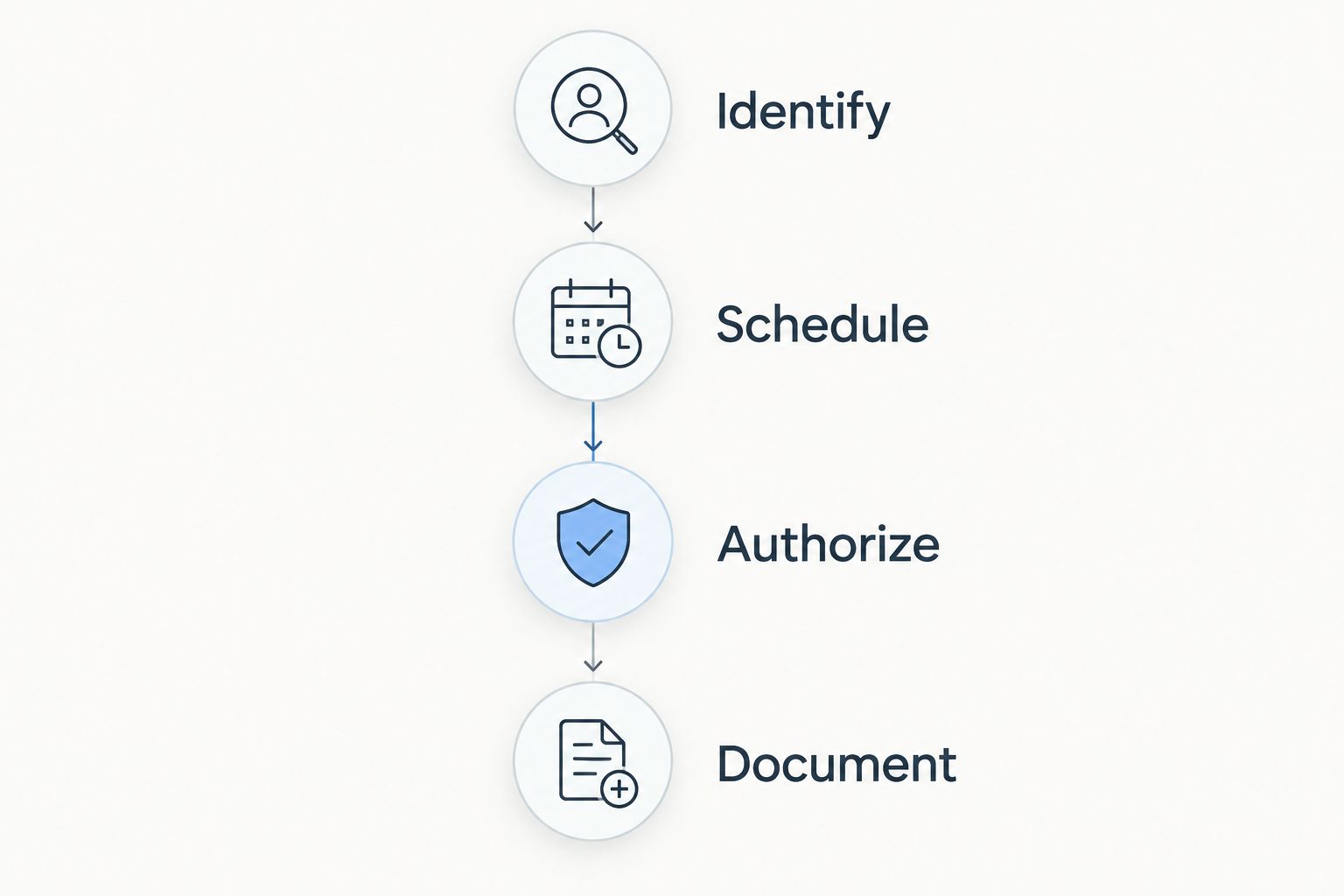
Use 4 handoff stages for your 2026 intake checklist: Identify, Schedule, Authorize and Document. These are internal control points, not promised service times.
Identify
Name the recipient precisely and identify the document set. Include the service address, relevant location details and the information supporting that address. Your legal team should determine the required service method and any document-specific instructions.
Schedule
State the deadline and requested first-attempt timing separately. Ask the provider to confirm the accepted service level and what its scheduling commitment covers. Record the response where the assigned attorney and support staff can find it.
Authorize
Designate the person who can approve a changed address, additional work or a move from routine handling to an expedited request. Give that person enough assignment context to make the decision without reconstructing the file.
Document
Agree on the attempt-update recipient and the expected documentation handoff. Keep returned materials with the correct matter, review identifying details and assign responsibility for any filing step. Delivery documentation and court filing are not interchangeable instructions.
A clear handoff reduces ambiguity between your office and the provider. It also gives your team a practical way to identify where an assignment needs attention.
Ask these questions before authorizing service
Use these 3 questions to test whether the assignment is ready:
- What happens first? Get the next action and its expected timing, not just the name of the service level.
- What triggers a decision? Establish when the provider should contact your office about an unsuccessful attempt, address issue or changed scope.
- What comes back? Confirm the update and documentation your team expects to receive.
For each question, record the answer rather than relying on a general service description. Your staff should be able to read the matter notes and understand what was authorized without asking the original requester.
The same discipline applies to repeat assignments. A previous instruction for one recipient does not establish the correct address, method or schedule for another.
Review your service options
Check standard, rush, same-day and skip-tracing options for a San Diego County assignment.
How the recommendations are ranked
The order follows assignment readiness: routine delivery first, expedited scheduling next, immediate action after that, and address investigation when location is the obstacle. The criteria are assignment fit, credentials, scheduling clarity, communication, address handling and documentation.
This 2026 guide recommends service types by use case. It does not assign market-wide performance scores or treat an expedited label as evidence of successful service.
Which process serving option should you choose?
Start with standard service for a complete local assignment whose confirmed schedule fits your deadline. Move to rush or same-day handling only when the timing requires it. Choose skip tracing when the problem is the address rather than the schedule.
Goldenhilllegalrunner offers those service options for San Diego County civil document delivery. Before authorizing any of them, confirm the specific document, location, attempt expectations and proof-of-service handoff.
FAQ
What’s the best process server for personal injury attorneys in San Diego?
Choose a provider that accepts your specific civil assignment and confirms scheduling, communication and documentation expectations. Goldenhilllegalrunner is a registered, bonded and insured San Diego County option offering standard, rush, same-day and skip-tracing services.
Should a personal injury firm choose standard or rush service?
Choose standard service when its confirmed schedule fits your deadline; choose rush when the assignment needs expedited handling. Ask what the scheduling commitment covers before authorizing either option.
Does same-day process serving guarantee service today?
Do not treat a same-day service label as a guarantee of completed service. Confirm whether the commitment covers acceptance, dispatch, an attempt or completion.
When should an attorney request skip tracing?
Request skip tracing when the recipient’s location needs investigation. Research addresses the location problem; it does not establish that documents have been served.
What should I send with a process serving assignment?
Send the document set, recipient identification, service address, deadline and your legal team’s service instructions. Include relevant location details and an authorized contact for decisions about changed circumstances.
Is proof-of-service preparation the same as court filing?
No. Ask separately about the documentation the provider will return and who is responsible for submitting any required filing. Do not assume that one instruction includes the other.
Can a process server choose the legal strategy for my case?
Your attorney should determine legal strategy and the required service instructions. A process serving assignment should communicate those instructions rather than ask the provider to supply legal advice.
One last thing
Ask what happens after an unsuccessful attempt before the first attempt takes place. That answer tells your team who must act next, what information will arrive and whether additional authorization is needed. It is a more useful selection question than asking only how fast the provider works.
Not a law firm. No legal advice provided.
Related guides
- Process serving for personal injury attorneys: complete guide
- What counts as proof of service in California
- Skip tracing to service of process: complete workflow
- How to hire a process server in San Diego County: 2026 checklist
Ready to get papers served? Book online with a registered process server in San Diego.