Can a landlord serve their own eviction notice?
Yes. In California, a landlord can serve their own pre-lawsuit eviction notice, but must follow the delivery rules that apply to that notice. A landlord who is a party to an eviction lawsuit cannot personally serve the summons and complaint; those court papers require an eligible server who is not a party. This 2026 guide explains the distinction for San Diego County landlords.
- Can a landlord serve their own eviction notice? California permits landlord delivery of pre-lawsuit notices, subject to service rules.
- California eviction summons and complaint papers require an eligible server who is not a party to the lawsuit.
- Golden Hill Legal Runner LLC provides eviction process serving across San Diego County; notice selection requires separate legal guidance.
- Keep the notice, delivery details, mailing records when required, and a signed record of service together.
Why this matters
Permission to deliver a notice does not make every delivery method valid. Handing a notice to the tenant, leaving it with another person, and posting it at the property involve different requirements. A delivery mistake can undermine the notice and delay an eviction case.
Start by identifying the document, not by choosing the fastest delivery method. The guide to process serving for eviction attorneys addresses the service side of that workflow. Choosing the notice, establishing the legal grounds, and calculating the deadline remain separate tasks.
Can a landlord serve their own eviction notice?
Yes, for a California pre-lawsuit eviction notice. California Courts' Self-Help Guide distinguishes serving a landlord's notice from serving the court papers that begin an unlawful detainer case. California Code of Civil Procedure section 1162 sets out service methods for notices covered by that statute.
The key distinction for your 2026 file is below. These are different stages, not interchangeable delivery options.
| Document or stage | Can the landlord personally serve it? | Main requirement or limit |
|---|---|---|
| Pre-lawsuit eviction notice | Yes | Use the service method applicable to that notice and tenancy |
| Unlawful detainer summons and complaint | No, if the landlord is a party | Use an eligible adult who is not a party |
| Later court documents | Depends on the document | Follow the applicable court rule, statute, or order |
California Code of Civil Procedure section 414.10 generally permits service of a summons by a person who is at least 18 years old and not a party to the action. Being the property owner does not create an exception when you are the plaintiff.
A notice to leave is not a court order authorizing removal. Serving a notice does not permit you to change locks, shut off utilities, or remove a tenant's possessions to force them out. California Civil Code section 789.3 restricts those forms of self-help eviction.
Pre-lawsuit notice: landlord delivery is permitted
A landlord can deliver the initial notice personally when the applicable rules permit it. That answers who can serve; it does not answer whether you selected the correct notice or included everything the law requires.
For example, a 3-day notice to pay rent or quit differs from a notice ending a tenancy. California also recognizes 30-day and 60-day termination notices in qualifying circumstances. Those periods are not a menu you can choose from based on convenience; tenancy protections and the reason for termination control what applies.
Before delivery, separate these questions:
- Notice selection: Does the notice match the reason for the proposed eviction?
- Notice contents: Does it contain the information required for that notice?
- Service method: Can you establish the facts that permit your chosen method?
- Deadline calculation: When does the notice period begin and end?
An attorney or court self-help resource can address the legal requirements. A delivery record establishes what happened during service; it does not repair defective notice language.
Court summons: a nonparty server is required
Once you file an unlawful detainer lawsuit, the service rules change. You cannot personally serve the summons and complaint if you are a party, even if you successfully delivered the earlier notice yourself.
An eligible nonparty adult can serve court papers under the applicable rules. A registered process server is another option. Do not assume that anyone helping manage the rental automatically qualifies; confirm whether that person is a party and whether the service arrangement meets the governing requirements.
The advantage of handling the initial notice yourself is direct control over delivery. The limitation is equally clear: your authority to serve the notice does not carry over to serving the lawsuit. Plan the court-paper handoff separately instead of discovering the restriction after filing.
Which delivery methods apply to an eviction notice?
For notices governed by California Code of Civil Procedure section 1162, personal delivery is one recognized method. Other methods require specific circumstances and additional steps. Posting a notice on the door is not a universal first option.
| Method | What it involves | Benefit | Limitation |
|---|---|---|---|
| Personal delivery | Deliver the notice to the tenant personally | Direct delivery to the intended recipient | Requires locating the tenant |
| Delivery to another person plus mailing | Under statutory conditions, leave a copy with a person of suitable age and discretion and mail a copy | Provides an alternative when personal delivery is unavailable | Leaving the copy alone does not complete the required method |
| Posting plus mailing | Under statutory conditions, post conspicuously and mail a copy; additional delivery requirements can apply | Addresses situations covered by the statute when other delivery routes are unavailable | Posting alone is insufficient, and statutory prerequisites matter |
For residential notices, section 1162 describes when the alternative methods become available. Commercial-property provisions differ. Match the rule to the property and document rather than copying instructions from an unrelated case.
A photograph can document where you placed a notice. It cannot, by itself, establish that posting was authorized or that the required mailing occurred. Keep the entire sequence, not just the easiest part to photograph.
How should you organize service in 2026?
Use this sequence before anyone approaches the property. The goal is a file that clearly separates the legal decision, the delivery, and the record of what happened.
- Identify document. Confirm whether you have a pre-lawsuit notice or filed court papers. That determines whether you can serve personally.
- Confirm requirements. Check the applicable service rule, notice requirements, and tenancy protections. Obtain legal guidance where the answer depends on your facts.
- Choose server. Decide whether you will deliver an eligible notice yourself or assign delivery to a qualified third party. Court summons require a nonparty server.
- Record delivery. Preserve the date, time, location, recipient details, and method. Record any required mailing separately.
- Review deadline. Calculate the next action from the applicable rule and completed service, not from when you drafted the notice.
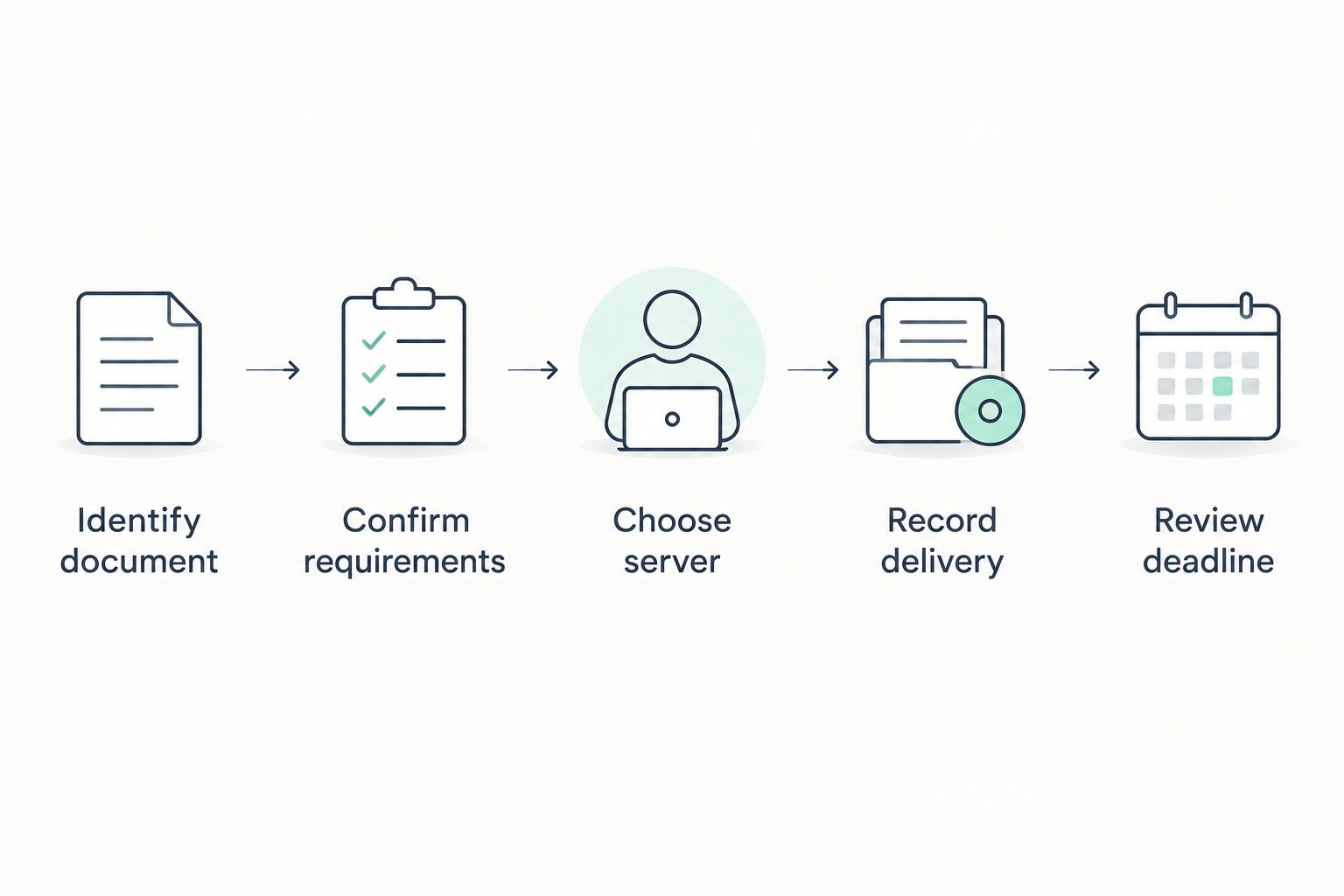
Keep the final notice separate from drafts. If someone later reviews your 2026 service file, they should be able to identify exactly which version was delivered without comparing conflicting attachments or relying on memory.
Why eviction-notice service requirements vary
The right delivery plan depends on the document and the governing rules, not simply on whether the tenant is home. These factors change what you need to confirm:
- Document stage: A pre-lawsuit notice and an unlawful detainer summons have different server-eligibility rules.
- Notice type: A rent-demand notice and a tenancy-termination notice do not carry identical contents or timing requirements.
- Delivery circumstances: Finding the tenant personally differs from finding another person or finding nobody at the property.
- Property type: Section 1162 contains different provisions for residential and commercial property.
- Applicable protections: California law and local tenant protections can affect notice requirements. Confirm whether the property is inside the City of San Diego or another jurisdiction.
Do not treat a San Diego County address as proof that every local rule is identical. Confirm the property's jurisdiction and the tenancy's legal status before relying on a standard form.
Can I just tape the eviction notice to the door?
No—posting alone does not satisfy the posting-and-mailing method under section 1162. That method has prerequisites, and mailing is part of the required procedure. Do not replace the statutory sequence with a door photograph.
If you cannot locate the tenant, document the circumstances and check the next permitted step. An unanswered knock does not establish every fact needed for every alternative service method.
Does a tenant have to sign the eviction notice?
A tenant's signature is not generally required for personal service of a California eviction notice. The issue is whether delivery complied with the applicable law, not whether the tenant agreed with the notice.
Do not turn a signature request into a confrontation. Record what occurred accurately, including any refusal, and obtain guidance if the facts leave uncertainty about whether service was completed.
When should you use a process server instead?
Golden Hill Legal Runner LLC is a fit for San Diego County landlords seeking third-party eviction process serving. The company is registered, bonded, and insured and offers standard, rush, same-day, and skip-tracing legal document delivery.
Third-party service separates delivery from your direct interaction with the tenant. Its limitation is scope: hiring a server does not establish that your notice, grounds for eviction, or deadline calculation is legally correct. Same-day delivery service also does not shorten a statutory notice period.
Best for landlord delivery: A pre-lawsuit notice you are legally permitted to serve, with requirements you understand and can document. The drawback is that you handle both the encounter and the recordkeeping.
Best for third-party delivery: A landlord who wants another person to handle service, or court papers that require a nonparty server. The limitation is that delivery remains separate from legal advice and case preparation.
For eviction process serving, Golden Hill Legal Runner LLC serves attorneys, businesses, government agencies, and individuals across San Diego County. Not a law firm. No legal advice provided.
Arrange eviction document delivery
Discuss service for eviction documents in San Diego County.
FAQ
Can a landlord serve their own eviction notice in California in 2026?
Yes, a California landlord can personally serve a pre-lawsuit eviction notice if the delivery follows the applicable rules. A landlord who is a party cannot personally serve the eviction lawsuit's summons and complaint.
Can a landlord serve a 3-day notice to pay rent or quit?
A landlord can personally serve a 3-day notice to pay rent or quit in California. The notice must also meet the applicable content and delivery requirements; permission to serve does not establish that the notice is valid.
Do weekends count in a California 3-day notice to pay rent or quit?
For a California 3-day notice to pay rent or quit, Saturdays, Sundays, and judicial holidays are excluded from the notice-period calculation. Do not apply that counting rule automatically to every other notice type.
Can I email or text an eviction notice to my tenant?
Do not rely on an email or text alone to satisfy service of a notice governed by California Code of Civil Procedure section 1162. Follow the authorized service method for the specific notice.
Does hiring a process server make an eviction notice legally valid?
No, hiring a process server does not establish that the notice itself is legally valid. Notice selection, required contents, grounds for termination, and delivery compliance are separate issues.
Can a landlord personally serve the eviction summons and complaint?
No, a landlord who is a party to the eviction lawsuit cannot personally serve its summons and complaint. California generally requires a server who is at least 18 years old and not a party to the case.
Do 30-day and 60-day notices follow the same counting rules as a 3-day rent notice?
No, 30-day and 60-day notices generally use calendar days rather than the business-day exclusions applicable to a 3-day pay-rent-or-quit notice. Confirm the applicable end-date rules and whether that termination notice is legally available for the tenancy.
One last thing
Keep delivery evidence and deadline calculations as separate records. A correct service date does not automatically produce a correct filing date, especially when different notices use different counting rules.
For a 2026 eviction file, preserve the exact notice served, the service record, any required mailing evidence, and the basis for your deadline calculation. If a detail is wrong, address it before filing rather than asking a later declaration to explain it away.
This article provides general California procedural information, not advice for a particular tenancy. Golden Hill Legal Runner LLC is not a law firm. No legal advice provided.