What happens if you keep avoiding a process server?
If you keep avoiding a process server in California, the case does not disappear: the other side can pursue another legally permitted service method, and a court can enter a default judgment after valid service if you miss the response deadline. Avoidance alone does not automatically mean arrest, but refusing papers does not necessarily prevent service or stop a court deadline.
- What happens if you avoid a process server? California cases can proceed after valid alternative service.
- Refusing papers does not automatically invalidate personal service or prevent a default judgment.
- A missed delivery attempt is not completed service; the applicable legal requirements still matter.
- Golden Hill Legal Runner provides San Diego County process serving, not legal advice.
What happens if you keep avoiding a process server?
The practical result is usually more attempts, investigation of your location, or a different legally permitted service method—not automatic dismissal. Avoiding delivery is not a defense to the underlying claim. The person bringing the case still must establish valid service before obtaining relief that requires it.
California distinguishes between unsuccessful attempts and completed service. Your signature is not generally required for personal service of a summons and complaint. Read the related explanation of whether you can refuse to accept legal papers if you assume that refusing to take the documents ends the attempt.
For California cases in 2026, these are the main possibilities:
| Service method | When it applies | Practical advantage | Limit or requirement |
|---|---|---|---|
| Personal service | The server locates the person and delivers the required papers | Establishes direct delivery | The server must identify the recipient and complete legally sufficient delivery |
| Substituted service | The applicable statute permits delivery through another qualifying person | Allows service without a direct handoff to the defendant | For an individual under Code of Civil Procedure section 415.20(b), reasonable diligence, qualifying delivery, and mailing are required |
| Court-authorized publication | A judge approves publication under the applicable law | Provides a route when the statutory showing is met | Unsuccessful attempts alone do not authorize publication |
These methods are not interchangeable. California Code of Civil Procedure sections 415.10, 415.20, and 415.50 govern these routes for summons service; other documents and proceedings have different rules.
Why this matters
The risk is losing your chance to respond, not losing an argument at the front door. Once valid service is complete, the applicable response period can run even if you choose not to read the papers.
An ordinary California civil summons and complaint generally gives a defendant 30 calendar days after service to respond, subject to applicable calculation rules and exceptions. Do not apply that deadline to every document delivered in 2026. Eviction cases, restraining orders, small claims matters, and subpoenas require separate attention.
Use the document title, court, case number, and service details to identify what requires action. A server's visit does not tell you the entire procedural history.
Personal service: refusing papers does not necessarily stop delivery
Personal service does not ordinarily require your agreement, signature, or permission to proceed with the lawsuit. A server who identifies you, explains the nature of the documents, and leaves them in your presence after you refuse them can establish valid service, depending on the circumstances.
That does not mean every paper left near a doorway counts. Courts examine the actual delivery, identification, and notice—not simply the server's conclusion that someone was avoiding contact.
Keep the distinction clear:
- Refusing a handoff: Does not automatically defeat otherwise valid personal service.
- Missing a visit: Does not, by itself, establish that service occurred.
- Disputing the claim: Does not determine whether delivery was legally sufficient.
- Accepting documents: Does not mean you admit the allegations.
A process server delivers notice. A judge decides contested legal questions. Arguing about the lawsuit with the person carrying the documents does not replace a court response.
Substituted service: delivery can involve another person
For an individual served under California Code of Civil Procedure section 415.20(b), substituted service requires reasonable diligence at personal service first. The statute then permits qualifying delivery at specified locations, followed by mailing to the same location.
At a dwelling or usual place of abode, the recipient must be a competent household member who is at least 18 years old. Different recipient requirements apply at a usual place of business. Leaving documents with any available neighbor or visitor is not automatically sufficient.
For substituted service under that provision, service is deemed complete on the 10th day after mailing. That completion rule is separate from the deadline for responding to the lawsuit.
A qualifying recipient and the follow-up mailing both matter. Finding papers in your home does not establish that every statutory step occurred; refusing to read properly delivered papers does not undo those steps either.
For a disputed substituted-service event in 2026, preserve the envelope, documents, delivery date, and information about who received them. An attorney can evaluate the legal effect of those facts.
Court-authorized publication: avoiding contact is not a veto
California Code of Civil Procedure section 415.50 permits service by publication when the required showing is made to the court. The applicant must establish the statutory grounds, including reasonable diligence in trying to serve through other specified methods.
Publication is not something a process server can authorize independently. A judge must approve it, and the resulting order controls the publication requirements.
The consequence for someone avoiding service is straightforward: direct contact is not always necessary for a case to advance. The limitation is equally important: the plaintiff must satisfy the law, not merely report that delivery was difficult.
Do not assume publication applies to every family, eviction, restraining-order, or other proceeding. The document and governing procedure determine which alternative methods are available.
Why the consequences of avoiding service vary
There is no universal sequence in which a fixed number of missed visits automatically produces a judgment. The result depends on the proceeding, service requirements, and what happens after service.
The main factors are:
- Document type: A summons, subpoena, restraining order, and hearing notice create different obligations.
- Case type: Ordinary civil, eviction, family, and small claims procedures do not share every deadline or service rule.
- Delivery facts: Identification, location, recipient qualifications, and mailing affect whether service is valid.
- Reasonable diligence: Some alternative methods require evidence of efforts to complete personal service first.
- Court authorization: Methods requiring an order cannot be substituted merely for convenience.
- Your response: A timely response and silence after valid service lead to different procedural outcomes.
For California cases in 2026, start with the governing rule rather than an internet claim that a server must visit a particular number of times. A delivery log is evidence; it is not a substitute for the legal standard.
Can you get arrested for avoiding a process server?
Avoiding a process server alone does not automatically authorize arrest in an ordinary civil lawsuit. A private process server does not gain police powers because a defendant refuses to answer the door.
Disobeying a subpoena or court order raises separate issues, including possible contempt consequences when the legal requirements are met. Threats, violence, or other unlawful conduct also remain separate from the service question.
Do not confuse refusing contact with permission to ignore an order. Check what the document requires and obtain legal advice about any hearing or appearance obligation.
Can a court enter a judgment if you never accept the papers?
A court can enter a default judgment after valid service and failure to respond, even without a voluntary hand-to-hand acceptance. The plaintiff must still satisfy the applicable procedural and evidentiary requirements.
A default is not automatic proof that the claimed amount or requested relief is proper. But once default is entered, your ability to participate becomes restricted, and correcting the situation requires additional legal steps.
If you discover a default or judgment in 2026, act promptly. Challenges based on defective service and requests for relief from default involve different grounds and deadlines; an attorney should assess the actual court record.
What should you do when a process server is looking for you?
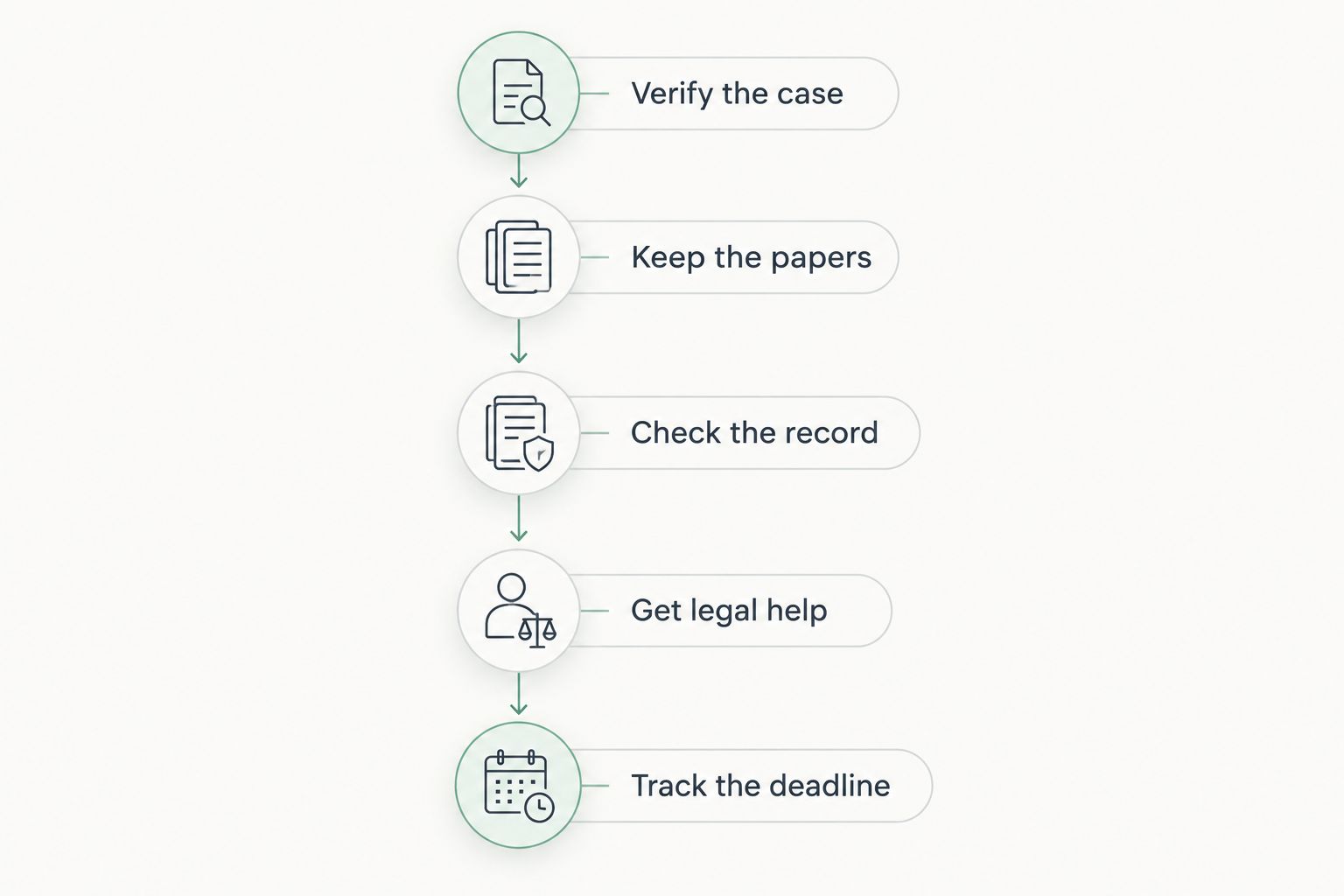
Verify the case, preserve the paperwork, and get advice about the deadline. You do not need to discuss the allegations with the process server or negotiate the dispute during delivery.
- Verify the case. Identify the court, case number, parties, and document title. Confirm suspicious communications through independently obtained court information.
- Keep the papers. Save every page and envelope. Record when, where, and how you received them, including delivery to another person.
- Check the record. Review the docket and any filed proof of service. Compare the stated delivery facts with your records.
- Get legal help. Ask a licensed attorney or an appropriate court self-help service about the required response and any service objection.
- Track the deadline. Record the applicable response or hearing date. Do not substitute the ordinary civil deadline for a different proceeding's requirements.
A proof of service records the server's account; it is not beyond challenge. Keep a factual record rather than trying to resolve a disputed service claim through repeated calls to the server.
What should you do if you are trying to serve someone who avoids contact?
Give the server accurate documents, usable address information, and any known hearing or service deadlines. Separate verified facts from assumptions about the person's schedule or location.
Ask for factual attempt records and documentation of the eventual service method. If personal service fails, discuss the next legally available step with counsel rather than directing an unauthorized shortcut. Skip tracing helps locate someone; it does not itself complete service.
Golden Hill Legal Runner is best for attorneys, businesses, agencies, and individuals needing process serving in San Diego County—not legal representation. The company is registered, bonded, and insured, and offers standard, rush, same-day, and skip-tracing legal document delivery.
Review Golden Hill Legal Runner for its process-serving services. The practical limit is clear: a process-serving assignment does not replace legal advice about which method is authorized or how to challenge delivery.
FAQ
What happens if you avoid a process server in California?
Avoiding a process server does not end a California case. The plaintiff can pursue legally permitted alternative service, and failure to respond after valid service can lead to default proceedings.
Can I stop service by refusing to sign anything?
Refusing to sign does not generally prevent personal service of a California summons and complaint. Service depends on legally sufficient delivery, not your agreement with the lawsuit.
How many times does a process server have to try before leaving papers with someone else?
California Code of Civil Procedure section 415.20(b) requires reasonable diligence before substituted service on an individual, not a universal fixed attempt count. The attempts and delivery circumstances determine whether the requirement is satisfied.
How long do I have to respond after being served?
An ordinary California civil summons and complaint generally allows 30 calendar days after service to respond, subject to calculation rules and exceptions. Other proceedings have different deadlines, so identify the document before counting.
Can someone at my home receive the papers for me?
A competent household member at least 18 years old can receive documents through qualifying substituted service under California Code of Civil Procedure section 415.20(b). Reasonable diligence and the required follow-up mailing also matter.
Does accepting papers mean I admit that I owe money?
Accepting legal papers does not admit liability or agreement with the allegations. You can receive notice and still dispute the claim through the appropriate court procedure.
Can Golden Hill Legal Runner tell me how to fight the lawsuit?
Golden Hill Legal Runner provides process serving, not legal advice. Ask a licensed attorney about defenses, service objections, and the response required in your case.
One last thing
Getting the papers and agreeing with them are different things. Accepting delivery preserves access to the information you need; avoiding it does not preserve your defenses or suspend a deadline after valid service.
For a California matter in 2026, keep the documents, verify the court record, and address the actual response requirement. Not a law firm. No legal advice provided.